Wednesday, August 31, 2022

Top Posts... A Short-Fused Conundrum: September 2022 Challenge Question

 
Globalspec Daily Digest - Engineering360
 

Source Products  |  Webinar Library  |  Standards

The latest news from CR4 and Engineering360

Digi-Key Electronics

Today's Featured Post

A Short-Fused Conundrum: September 2022 Challenge Question

You have two segments of TNT fuse. Each is rated to burn in exactly one hour; however, the fuses are not identical and do not burn at a constant rate. Some sections burn fast, others slow. How do you measure 45 minutes using only the fuses and matches?... Read more 

New Blog Entries

A Disc Brake Upgrade Offers Increased Safety Without Sacrificing Stock Appearance

Despite the insistence from some diehard traditionalists that there’s no reason to upgrade a vintage car to disc brakes, sticking with four-wheel drums can be a drag—literally and figuratively. The simple truth is that, in an era of distracted drivers plowing along in lumbering SUVs &md... Read more 

Recommended Webinar

Unlock the Next Level of Audio Performance and Power Efficiency with Infineon's XENSIV™ MEMS Microphones - September 6, 2022

Infineon Technologies AG

Unlock the Next Level of Audio Performance and Power Efficiency with Infineon's XENSIV™ MEMS Microphones - September 6, 2022

View this on-demand webinar

Join this webinar to learn more about Infineon's packaged XENSIV™ MEMS microphones portfolio and roadmap and how its ultra-low noise and ultra-low power microphones address the key challenges - high audio call quality, low noise active noise canceling and long battery life - in high-end consumer audio applications.

Carlo Gavazzi RM1D series DC switching solid state relays

Digi-Key Electronics

Carlo Gavazzi RM1D series DC switching solid state relays

Carol Gavazzi’s RM1D series DC switching solid state relays use a low power dissipation output MOSFET to create superior thermal performance and provide increased reliability for transportation and off-grid applications.

View more

Latest News

What should an owner look for in a quality coatings contractor?

IronOrbit to showcase GPU tech to future-proof businesses at Autodesk University 2022

New product preview: ElectroCraft introduces the RPE series of brushless DC servo motors

Miniature pinch valves now available

Video: Anellotech demonstrates new direct route to light olefins and BTX from conversion of mixed plastic waste

SCHURTER to exhibit at EV Tech Expo and Battery Show 2022

Design principles and checklist for Hall effect sensors

MintAir orders 40 Jaunt air taxis for Korean market

Analog Devices' precision narrow bandwidth signal chains

Digi-Key Electronics

Analog Devices' precision narrow bandwidth signal chains

Analog Devices’ precision narrow bandwidth signal chains optimize the performance of systems with signals of interest in the range of DC to approximately 10 kHz, delivering best-in-class accuracy and stability.

View more
   

Engineering360 publishes more than 60 free industry newsletters - browse our portfolio.

Want to reach industry executives with your message? Download our media kit or contact us directly at sales@globalspec.com.

About this email: You are receiving this message as part of your complimentary newsletter subscription to Globalspec Daily Digest. If you no longer wish to receive this newsletter, you can modify your preferences or unsubscribe.

🏁 Axios Finish Line: Demystifying AI

Plus: Robot writes the news | Wednesday, August 31, 2022
 
Axios Open in app View in browser
 
 
Axios Finish Line
By Mike Allen, Erica Pandey and Jim VandeHei ·Aug 31, 2022
Aug 31, 2022

Welcome back. Join the conversation at FinishLine@axios.com.

  • Smart Brevity™ count: 532 words ... 2 minutes.
 
 
1 big thing: How to think smartly about AI
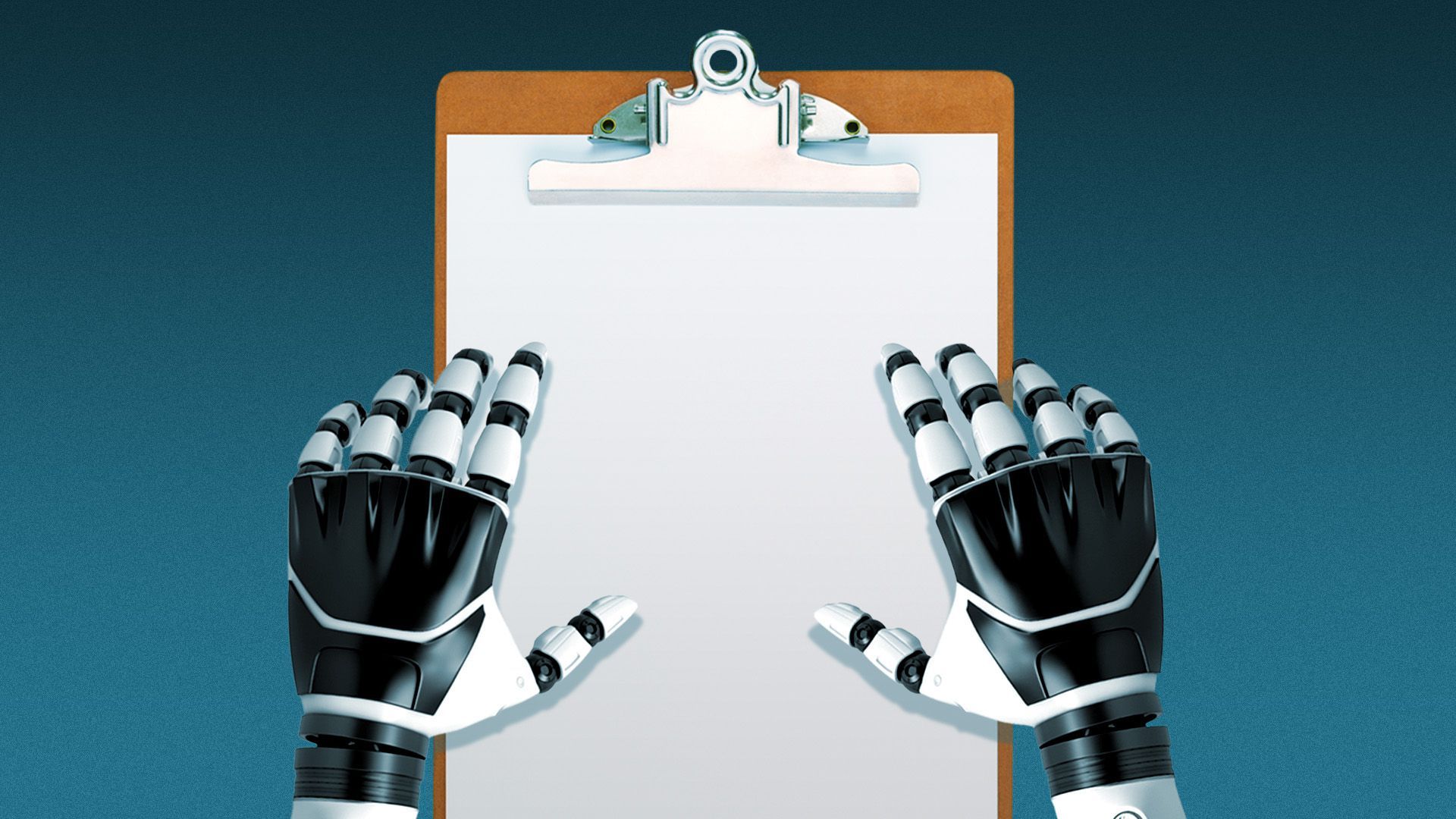
Illustration of robot hands holding a clipboard.

Illustration: Shoshana Gordon/Axios


Arguably the most consequential technological transformation of our lifetimes is coming faster than we think — and we're not adequately prepared.

Why it matters: Artificial intelligence is rapidly improving at human-like tasks, including language and reasoning.

  • And the number of plugged-in experts who say we have years and years to prepare ourselves for AI's rise is dwindling, New York Times tech columnist Kevin Roose lays out in a stunning new report.

Case in point: Five years ago, AI's big win was that AlphaGo — a machine built by Google — beat humans at the game Go, which was one of the last games where humans still had the upper hand.

  • But even that seems minor compared with last year, when Google's AI solved a molecular biology problem that had confounded scientists for decades, The Times reports.

What's happening: We asked the top experts in our newsroom exactly what AI can and can't do — and how we should be thinking smartly about it.

Yes, AI is getting smarter. It will keep getting astonishingly better at suggesting possibilities, like videos to watch, and extending patterns, like next things to say in a chat, Axios managing editor for tech Scott Rosenberg tells us from the Bay Area.

  • But for the foreseeable future, people will remain the arbiters of which possibility is actually best, or which pattern is useful.
  • In this sense, AI will always be a tool — but one so powerful and able to operate independently enough that we can be forgiven for mistakenly seeing it as autonomous.

But AI's results are only as good as the algorithms and the data used to train the systems, both of which are susceptible to bias, Axios chief tech correspondent Ina Fried notes.

  • That helps explain why, for example, chatbots may quickly devolve into racist speech. Or why AI-generation pictures of a doctor are likely to show a white man.

🧠 Reality check: AI is far from human. Despite high-profile claims to the contrary, the machine-learning-based AIs we know today can't achieve sentience because they don't have bodies and senses to create a sense of self in time and place, Scott says.

  • That could change! But no one knows how to make it happen today, or even has a good theory for how to get there. And before we go down that road, we'd better have a long conversation about whether it's even a good idea.

Share this story.

Share on Facebook Tweet this Story Post to LinkedIn Email this Story


A message from Axios

Boost staff productivity with Axios HQ


Only 5% of staff make it past the first few lines of any written company update.

Smart Brevity® — our communications formula — can make your writing 40% shorter and more scannable without cutting what's key.

See how the most productive organizations run on HQ


🗞️ Your AI-powered newspaper

One of the most talked-about applications of AI is in local newsrooms, where staffing shortages are pushing editors to consider machines that can churn out stories.

  • The machines wouldn't be tasked with hard-hitting journalism, but with plug-and-chug stories where numbers can be dropped into a template.
  • Think minor-league sports games, or company earnings reports.

But news outlets are also looking into AI for some more complex tasks that might be susceptible to bias and require a human touch, including comment moderation and story recommendations, according to an AP survey.

💬 What are your thoughts on the rise of AI in our workplaces and lives? We'd love to hear your thoughts at finishline@axios.com.

Share on Facebook Tweet this Story Post to LinkedIn Email this Story
 
HQ
Are you a fan of this email format?
It's called Smart Brevity®. Over 300 orgs use it — in a tool called Axios HQ — to drive productivity with clearer workplace communications.
 

Axios thanks our partners for supporting our newsletters. If you're interested in advertising, learn more here.
Sponsorship has no influence on editorial content.

Axios, 3100 Clarendon B‌lvd, Arlington VA 22201
 
You received this email because you signed up for newsletters from Axios.
Change your preferences or unsubscribe here.
 
Was this email forwarded to you?
Sign up now to get Axios in your inbox.
 

Follow Axios on social media:

Axios on Facebook Axios on Twitter Axios on Instagram


Axios Alerts: UN report finds "serious human rights violations" in Xinjiang

 
Axios Logo  Alerts
 
Axios   
UN report finds "serious human rights violations" in Xinjiang
The big picture: The UN Human Rights Office of the High Commissioner released a report detailing "crimes against humanity" in Xinjiang against Uyghurs and other ethnic minorities.
Read on Axios
 
Download the Axios App
Download on the App StoreGet it on Google Play
Follow Axios on Social Media
FacebookTwitterInstagramYouTube
Contact
Axios, 3100 Clarendon B‌lvd, Arlington VA 22201
 
You received this email because you signed up for news alerts from Axios.
Change your preferences or unsubscribe here.


America’s baffling booster messaging

Wednesday, August 31, 2022
The Daily

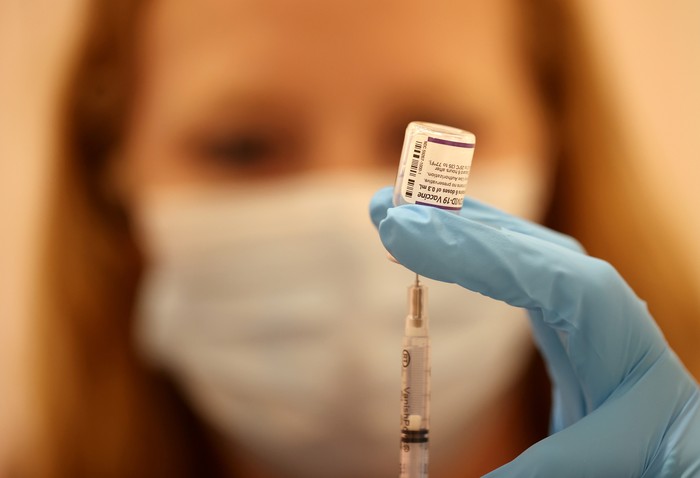
Today the FDA authorized two updated COVID-19 vaccines, making the new shots available to millions of Americans as early as next week. (Wondering when you should get yours? Our science editor Rachel Gutman-Wei has a useful guide.)

In some ways, the timing of the new vaccines "couldn't be better," our science writer Katherine J. Wu wrote last week. But in others, it couldn't be worse. Katie and I talked about the paradox of America's fall booster plan, what happened to the CDC, and more.

But first, here are three new stories from The Atlantic.

A Baffling Message

View in browser

Isabel Fattal: You recently wrote about how the timing of the latest COVID-19 booster rollout has serious pros and cons. How so?

Katherine J. Wu: There's a lot that's worth celebrating. We are getting these boosters possibly as early as next week, and right now BA.5 is still the dominant coronavirus subvariant in the U.S. The vaccines include ingredients that are going to teach people's bodies to recognize and fight off BA.5. It's going to be the first time since the beginning of the vaccine rollout that we have a shot that is really well matched to the virus that's circulating. That's a huge win.

The downside is that the vaccines are coming right after a big, sweeping update to the CDC's COVID guidelines. There's been a huge loosening of pandemic protections. Now there are very few things standing between us and the virus. Vaccines are super important, but they can't do this job alone. There's still a ton of virus around, and we know that vaccines, as good as they are, can't prevent all infections. They can't totally prevent long COVID. By telling the public that it's no longer necessary for most people to take additional protective measures against infection, the CDC is putting enormous pressure on vaccines. It's also a baffling message to send to people: You don't have to do anything about COVID, except please go get your booster urgently. It doesn't totally square.

Isabel: Is there a clearer way to explain to people who are eligible to get this booster why they should do so?

Katie: The tricky thing about vaccine uptake is that, in the same way that not everyone has the same reason for not getting a vaccine, not everyone has the exact same reason for getting a vaccine. So convincing people to get on board with this is going to be complicated. I do think there's going to be a huge wave of people who are like, Inject it straight into my eyeballs; I'm ready for this. But those aren't the people I'm worried about.

People have spent this entire year hearing the message that things are so much safer now, COVID-wise. The incongruity here is, So why do I need this booster? I thought you said I was good. That's not to say that we should talk about COVID like a five-alarm fire, and imply that the pandemic is as bad as it was in 2020. We shouldn't, and it's definitely not. But maybe a better way to approach this would be to routinize all of the various protections we've come to adopt. The virus is still here; it's still presenting a significant threat. It may not be as bad as it was, but we need some layered protection strategies to minimize its impact on our lives.

Something I've talked to people about over the past couple years, regarding vaccines, is: What if we don't frame it as a booster? That word has become really charged. We don't really call the annual flu shot a "booster." We update it as the virus mutates. What if we did the same thing here and said "This is our annual COVID shot"?

Isabel: This will probably be America's last free COVID-19 shot. Can you talk a little about why that's the case, and what it means going forward?

Katie: The vaccine's commercialization means that the government no longer has to foot the bill, taking some of the pressure off of it financially. But it's also a political move that allows the administration to say, essentially, "We no longer have to foot the bill. We won; we did it." If we are switching out of emergency mode and pivoting to the typical medical model, then everything is normal.

Which gets to the second part of your question, which is a big worry. With commercialization, future shots will probably have to be covered by insurance companies. That means vaccines will still be available to those with the most privilege—both socioeconomically and otherwise—to seek out medical care, to access medical care, to go to a pharmacy, and to wait in line for these vaccines. But the people who are often most vulnerable to the virus will end up getting the least protection against it.

Isabel: Finally, let's talk a bit about the CDC. Director Rochelle Walensky recently acknowledged that the organization made big mistakes in its handling of the pandemic, and that it needs to be retooled. How did the CDC get to this point?

Katie: The main issues pointed out here were that the CDC acted too slowly and didn't make data available to the public quickly enough. When they did issue guidance, it was confusing, and people lost trust in the agency. We also know that the Trump administration did meddle in the development and the rollout of CDC guidance.

The CDC has been siloed as a very research-focused institution. The organization was geared toward the slow-moving, step-by-step academic form of science that probably works fine not in times of crisis. But during a pandemic, when people need to know what to do as quickly as possible, and their lives are on the line, it might be less successful.

Those are some gaping issues, and I applaud the CDC and Walensky for recognizing those issues and calling for a revamp. And there are other issues worth addressing that we haven't heard enough about. As I see it, it's not just that guidance has been confusing or too slow, but also that it has been so individually minded. You monitor your own risk; you worry about your own health. That is not going to work in the context of infectious disease, and it's not very well minded toward public health.

Related:

Today's News

  1. Experts from the United Nations' nuclear-watchdog agency are preparing to cross a buffer zone to inspect the Zaporizhzhia Nuclear Power Plant, which is located in an active battlefield.
  2. The South Carolina House passed an abortion ban with exceptions for cases of rape or incest up to 12 weeks, and for the life of the pregnant person, after an earlier version with only the latter exception failed. The bill heads to the State Senate next week.
  3. Americans' average life expectancy saw the sharpest two-year decline in nearly 100 years. The pandemic drove most of this decline.

Dispatches

Evening Read

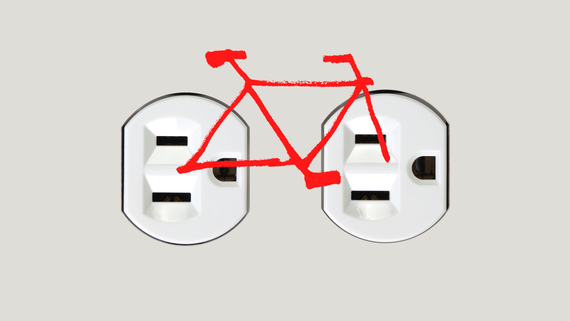
An illustration of a bicycle superimposed over two electrical sockets (The Atlantic)

The E-bike Is a Monstrosity

I'd like to drive less, exercise more, commune with nature, and hate myself with a lesser intensity because I am driving less, exercising more, and communing with nature. One way to accomplish all of these goals, I decided earlier this year, was to procure an e-bike. (That's a bicycle with a motor, if you didn't know.) I could use it for commuting, for errands, for putting my human body to work, and for reducing my environmental impact. A cyclist I have never been, but perhaps an e-biker I could become.

Read the full article.

More From The Atlantic

Culture Break

Read. Diary of a Void, by Emi Yagi, a novel about a lie that reshapes a life.

Watch. Borgen: Power & Glory, on Netflix, a prescient Danish political drama. Watch if you ever wanted The West Wing to go several shades darker.

Play our daily crossword.

P.S.

Because Katie recently wrote about how good mosquitos are at smelling us, I asked her for advice on avoiding them over Labor Day Weekend. Her response: "I got nothing. I am delicious, and I don't know why." She paused, and then came up with this: "Find someone more delicious than you and stand next to them. Or hang out with me, I guess."

— Isabel

Did someone forward you this newsletter? Sign up here. Need help? Contact Customer Care. Explore all of our newsletters, including our special offerings for subscribers.

Most Popular on The Atlantic


This email was sent to edwardlorilla1998.tower@blogger.com
You've signed up to receive newsletters from The Atlantic.

If you wish to unsubscribe from The Atlantic newsletters, click here.

To update your email preferences, click here.

The Atlantic Monthly Group LLC · The Watergate · 600 New Hampshire Ave NW · Washington, DC 20037